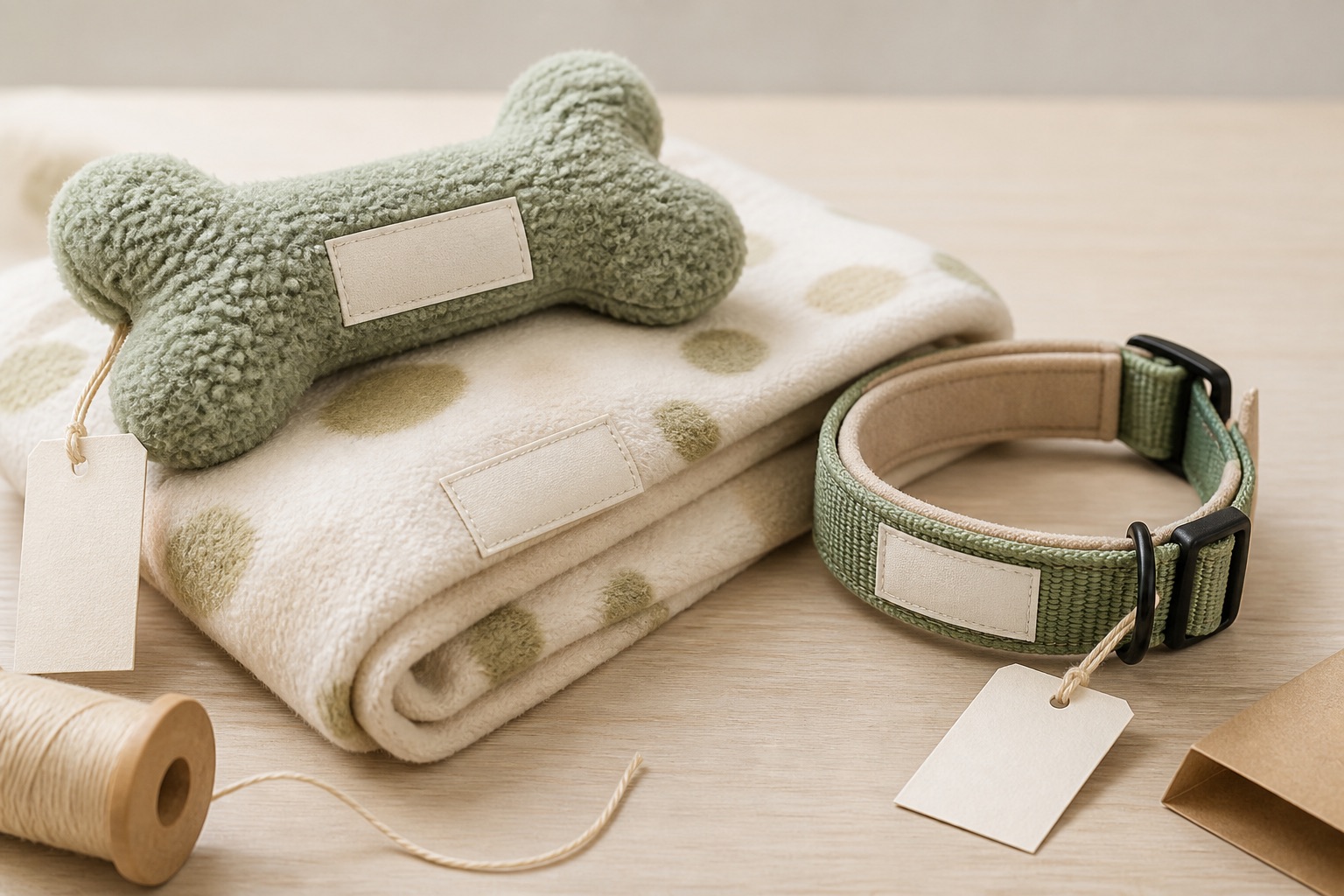
The toy formats we produce
We work across the main retail formats: plush toys (with or without squeakers), rope and tug constructions, TPR and natural rubber chew items, interactive and treat-dispensing designs, and the accessory items that sell alongside them — collapsible play tunnels, wands and fetch toys.
Because toys are assembled rather than moulded in one piece, they are the most customisable category we run. A plush toy can be re-shaped, re-coloured, re-sized, given a new squeaker, printed with your artwork and stitched with your woven label, all on a modest minimum. That makes toys the natural first OEM project for a new brand.
What to specify on a toy order
| Field | What to pin down |
|---|---|
| Primary material | Plush fabric and pile height, cotton or polypropylene rope, TPR, or natural rubber. State the material you want to advertise, not just the look. |
| Filling | Polyester fibre, recycled fibre, or crinkle film. For anything a dog may open, specify the filling explicitly — this is where the material-safety conversation starts. |
| Squeaker | Reed type, size, and whether it is stitched into a separate pocket. A squeaker that can be reached and swallowed is the most common toy hazard. |
| Stitching | Single or double stitch, and whether stress points are bar-tacked. Double stitching at the joint is what separates a toy that survives a week from one that survives a season. |
| Hardness (chew items) | Durometer or shore rating for rubber and TPR, plus the intended dog size and chewing strength. Hardness is the specification buyers skip and then complain about. |
| Packaging | Polybag with a header card, blister, printed retail box, or bulk. Toys are impulse purchases, so the hanging presentation carries real weight at shelf. |
Materials rules that now reach pet toys
- Azo colourants and heavy metals: Restricted under REACH for the EU and mirrored in most Western retail programmes. Buyers increasingly ask for it on pet goods even where the letter of the law is aimed elsewhere.
- Phthalates: Restricted in the EU and in US children's products, and a routine question from European pet retailers. Specify plasticiser-free compounds at quotation stage.
- Children's toy standards: If a pet toy is plausibly appealing to a child — small, plush and soft — some markets will assess it under toy rules. EN 71 in the EU, ASTM F963 in the US. Tell us if your channel treats pet toys as toys.
- Recycled content and packaging: EU packaging rules are tightening recycled-content and recyclability expectations, and non-EU sellers are increasingly asked to appoint an EU-based representative. This is covered in the compliance guide linked below.
Inspection focus for assembled goods
Toy inspection is about pull strength and stitch integrity. We test the joint between the body and any appendage, check the squeaker pocket by hand, confirm no loose fibre or bead filling can escape through the seams, and verify the label content against the specification. Where a buyer has a defined pull-force limit, we test to it.
Mixed orders are the norm in this category — a buyer will often take five plush designs, two ropes and a tunnel in one shipment. We plan the carton so that mixed SKUs stay separated and the master carton weight stays within manual handling limits, and we give you the full carton matrix for freight calculation.
Related supply lines
Buyers sourcing pet toys usually build a mixed order across Pet Strollers · Pet Cleaning Supplies · Cat Beds & Car Dog Beds — all of which can ship together in one consolidated consignment.