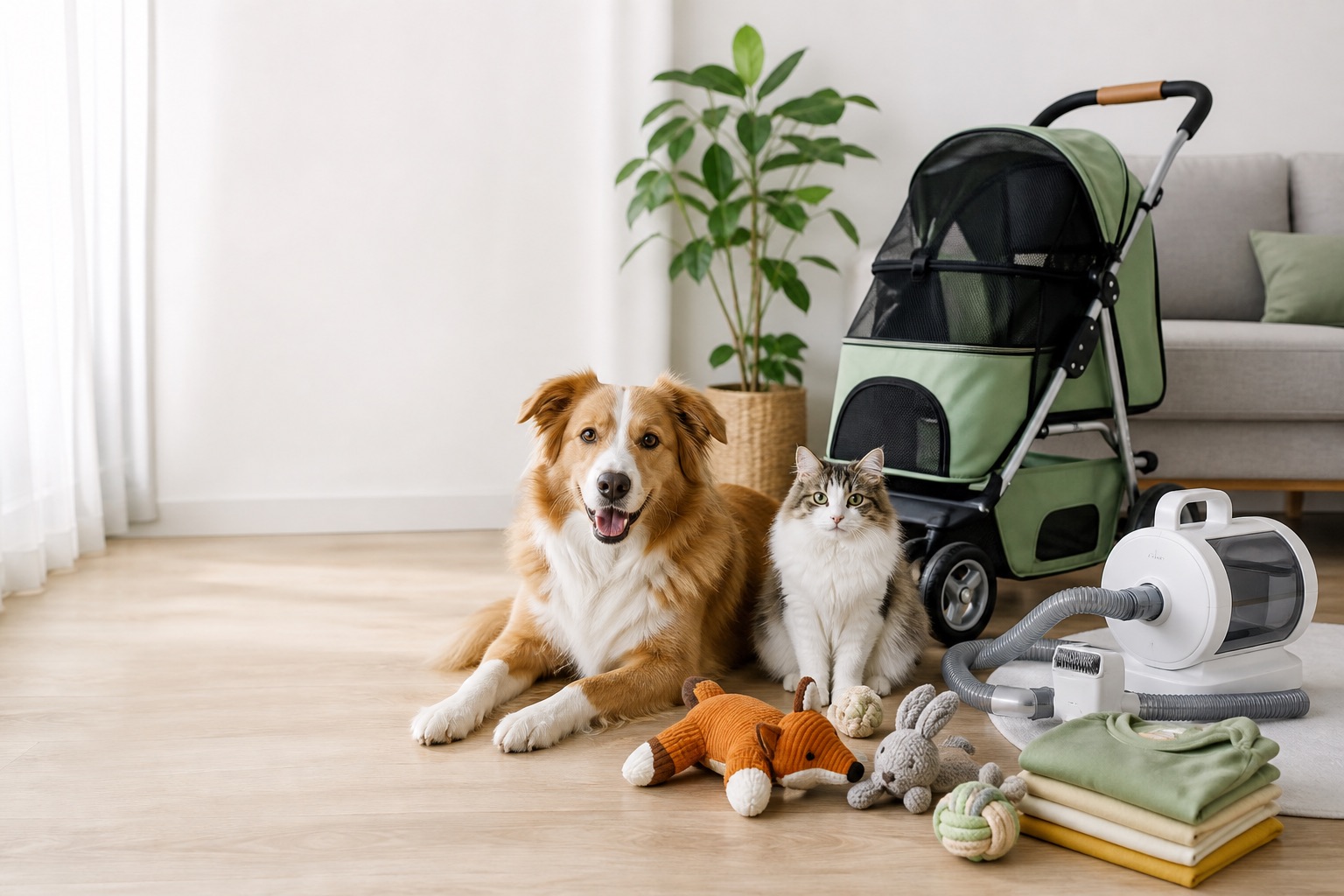
What we supply
On the apparel side: seasonal coats and jackets, raincoats, cooling vests, knitted jumpers and the harness-and-coat combinations that sell through winter. On the carrier side: ventilated backpack carriers for small pets, soft-sided slings and front carriers.
Both sub-lines share a planning problem. A size run only sells if the whole run is in stock, and a colour story only works if all the pieces arrive together — which means the order has to be placed early enough to allow sampling and production before the season opens.
What to specify
| Field | What to pin down |
|---|---|
| Size run | The set of sizes you intend to sell, defined by back length and chest girth, not by an S/M/L label alone. Compare the measurements, because size labelling is not standardised between manufacturers. |
| Fabric | Fleece, quilted nylon, cotton knit, or a soft-shell laminate. For cooling items, specify the mechanism and confirm it is what you advertise. |
| Closure | Velcro, buckles, or both. High-frequency velcro wears out; a buckle at the chest is the upgrade buyers ask for. |
| Carrier ventilation | Mesh panel placement and the opening design. Airflow is the safety-relevant field on a carrier — a closed backpack is a heat risk, not just a comfort problem. |
| Carrier weight rating | Stated maximum pet weight, and how the load is carried. Shoulder and chest strap design decide whether a rating is realistic. |
| Care labelling | Fibre composition and care instructions. These are legally required in most destination markets and are yours to state accurately. |
Seasonal planning and the minimum-effort order
- Plan a season ahead. Sampling, artwork approval and production take time; an order placed once the weather has turned arrives too late to sell at full price.
- Keep the size run tight but complete. A short run with full coverage of the core sizes outsells a wide run with gaps, because the retailer cannot restock the missing size.
- Test with a small colour story. Two or three colours in the core sizes is enough to validate a design, and it keeps the MOQ per piece manageable across a mixed order.
Inspection and material rules
Apparel inspection is stitch, fit and hardware. We check seam integrity at the stress points, run buckles and velcro on sampled units, verify the size measurements against the size chart you published, and confirm the care label content matches the actual fibre composition.
Carrier backpacks get an additional check: mesh integrity, strap attachment at the load points, and zip function on the opening. The attachment point where the shoulder strap meets the body is the part that fails, so it is checked on every unit rather than a sample.
Textile goods in this line fall under the same material restrictions as other textiles — restricted azo colourants and phthalates under REACH for the EU, plus state and federal limits for the US. Fibre composition and care labelling requirements vary by market, and the compliance guide linked below maps the EU, UK and US positions.
Related supply lines
Buyers sourcing pet clothing & backpacks usually build a mixed order across Pet Strollers · Cat Beds & Car Dog Beds · Pet Toys — all of which can ship together in one consolidated consignment.